
SS-31 10 mg Dosage Protocol
Table of Contents
What is SS-31?
SS-31 (also known as Elamipretide) is a mitochondria-targeted tetrapeptide composed of four amino acids ($D\text{-Arg-Dmt-Lys-Phe-NH}_2$). It was developed to selectively bind to cardiolipin, a unique phospholipid located exclusively within the inner mitochondrial membrane.
SS-31 operates primarily by stabilizing cardiolipin-protein interactions, which preserves mitochondrial cristae structure and optimizes electron transport chain supercomplexes. This mechanism significantly reduces pathological reactive oxygen species (ROS) production while enhancing cellular ATP synthesis in high-demand tissues. In 2025, SS-31 received FDA accelerated approval (under the brand name Forzinity) for Barth syndrome.
Preclinical and clinical literature highlight SS-31’s capacity to protect against mitochondrial dysfunction across various conditions, including heart failure, neurodegenerative diseases, chronic kidney disease, and age-related muscle atrophy. SS-31 is widely profiled as an investigational peptide for scientific research and targeted cellular bioenergetics.
Potential Areas of Research
- Cardiolipin Stabilization & Cristae Structure: Studied for its ability to bind selectively to cardiolipin, maintaining inner mitochondrial membrane integrity and preventing cytochrome c release.
- ATP Synthesis & Energy Bioenergetics: Profiled for optimizing electron transport efficiency and restoring ATP production in energy-demanding organs like the heart, brain, and skeletal muscle.
- Reduction of Oxidative Stress: Examined for its targeted action in limiting pathological ROS generation at the mitochondrial level without disrupting normal physiological signaling.
- Neuromuscular & Functional Support: Investigated in clinical models (such as Barth syndrome and myopathy) for improving muscle strength, exercise capacity, and physical endurance.
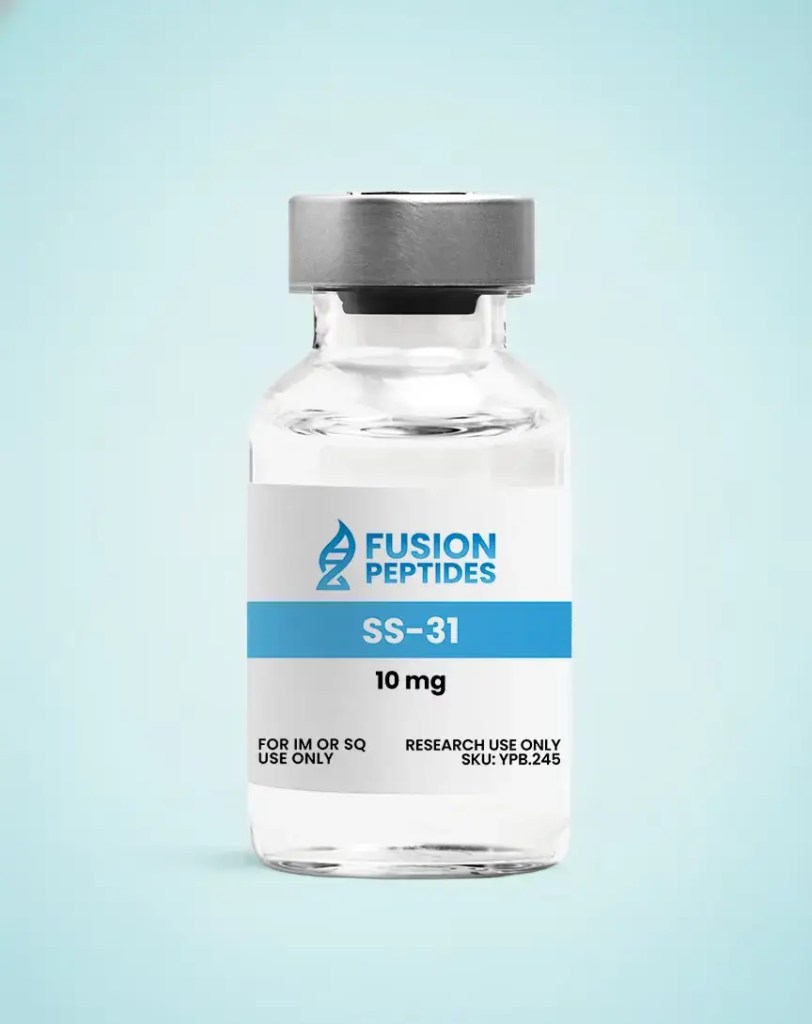
SS-31 10 mg Dosage Protocol
- Vial Size: 10 mg (10,000 mcg)
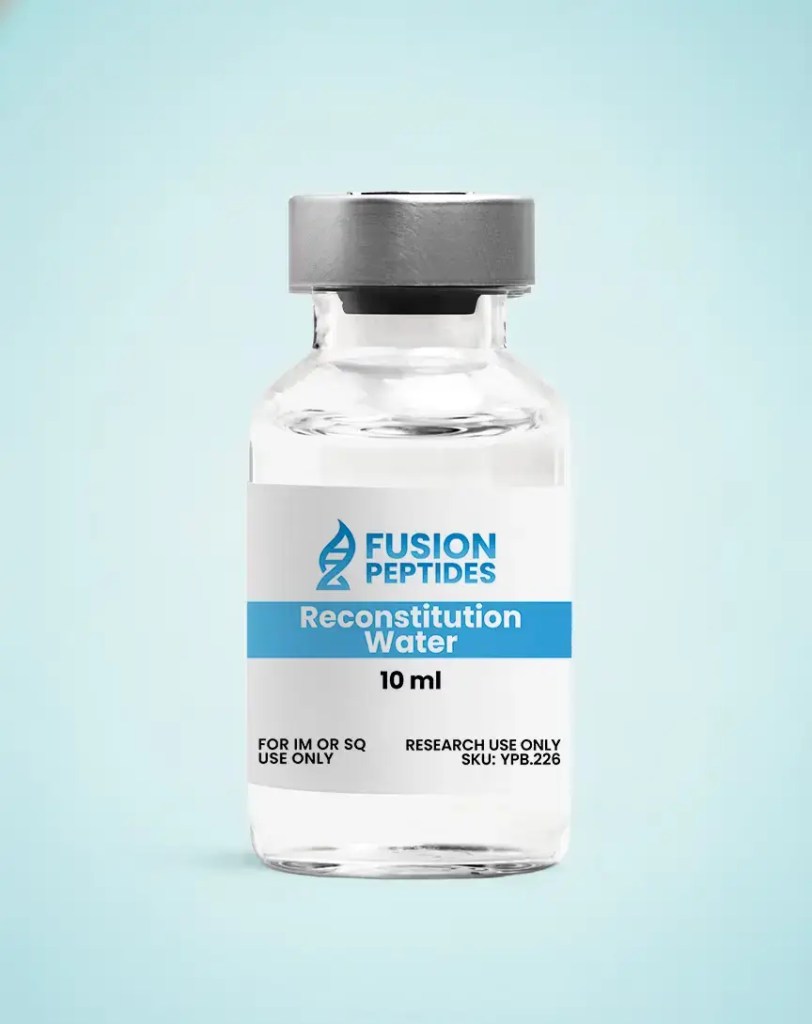
- Reconstitution: 1.0 mL Bacteriostatic Water
- Concentration: 10 mg/mL (10,000 mcg/mL or 100 mcg per U-100 Syringe Unit)
- Administration: Subcutaneous Injection
- Frequency: Once daily at a consistent time
- Protocol Schedule: 8 to 12 consecutive weeks (Standard gradual titration: 5 mg/day for Weeks 1–2, increasing to 10 mg/day for Weeks 3–8+)
Dosing & Reconstitution Chart
Weeks
Daily Dose
Syringe Units (U-100 / 1mL Syringe)
Vial & Volume Note: Reconstituting a 10 mg vial with 1.0 mL of bacteriostatic water provides a clean 10 mg/mL concentration. At a standard target dose of 10 mg daily, exactly one 10 mg vial (1.00 mL or 100 units) is used per day. Doses exceeding 10 mg (such as 15 mg or 20 mg) exceed a single standard 1 mL syringe and must be split into two separate subcutaneous injections at different sites.
Protocol Supply Calculations
For an 8 to 12-week daily subcutaneous protocol:
- SS-31 10 mg Vials: 50 vials for 8 weeks (standard schedule); 77 vials for 12 weeks (standard schedule); 105 vials for 12 weeks (advanced schedule).
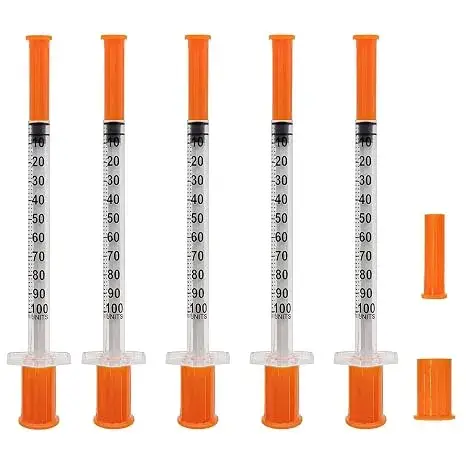
- Insulin Syringes (U-100, 1 mL): 56 syringes for 8 weeks; 84 syringes for 12 weeks (advanced protocols with split injections require additional syringes).
- Bacteriostatic Water: 2 × 30 mL bottles for 8 weeks (50 mL total used); 3 to 4 × 30 mL bottles for 12 weeks (77–105 mL total used).
- Alcohol Swabs: 112 to 168 swabs (2 per day: 1 for vial stopper, 1 for injection site).
Reconstitution Steps
- Prepare and Sanitize
Wipe the rubber stoppers of both the bacteriostatic water bottle and the 10 mg SS-31 vial with fresh alcohol swabs. Allow them to air-dry completely (30–60 seconds). - Draw Diluent
Using a sterile mixing syringe, draw up exactly 1.0 mL of bacteriostatic water. - Add Liquid Slowly
Insert the needle into the 10 mg SS-31 vial at a slight angle. Direct the stream of bacteriostatic water down the inner glass wall of the vial rather than spraying directly onto the powder cake to prevent foaming. - Dissolve Content
Gently roll or swirl the vial between your palms until the powder is entirely dissolved and the liquid is completely clear. Do not shake vigorously. - Label and Refrigerate
Label the vial with the preparation date and concentration (10 mg/mL). Refrigerate immediately at 2–8°C (35.6–46.4°F), protected from light exposure. Use within 4 weeks.
Storage & Stability
- Lyophilized Powder (Unmixed): Store long-term frozen at −20°C (−4°F) in the original sealed vial, kept dry and protected from light. Allow frozen vials to reach room temperature before opening to minimize condensation.
- Reconstituted Solution (Mixed): Store strictly refrigerated at 2–8°C (35.6–46.4°F) immediately after mixing. Do not refreeze reconstituted liquid. Reconstituted with bacteriostatic water, use within 4 weeks for optimal stability and potency.
Subcutaneous Injection Technique
- Timing: Inject once daily at a consistent time each day.
- Injection Sites: Select areas with a rich subcutaneous fat layer, such as the periumbilical region of the abdomen (at least 2 inches away from the navel), outer upper thighs, upper arms, or upper buttocks.
- Site Rotation: Rotate injection sites systematically across different regions to prevent localized tissue lipohypertrophy or skin sensitivity.
- Administration Method: Pinch a fold of clean skin (1–2 inches), insert the U-100 needle at a 45° to 90° angle (90° for average build, 45° if lean), and depress the plunger slowly over 3–5 seconds. Hold for 5 to 10 seconds before withdrawing to prevent leakage.
- Safe Disposal: Discard used single-use syringes immediately into an approved, puncture-proof sharps container. Never recap needles.
Technical Notes & Observational Safety
Injection-Site Reactions: Localized, mild-to-moderate skin reactions (redness, itching, transient discomfort) are the most common reported side effects (~80% in clinical trials) and typically resolve within a few hours.
High Safety Profile: Published human clinical trials demonstrate favorable safety and tolerability with no dose-limiting toxicities.
Split Dose Management: For higher-dose protocols requiring $\ge15\text{ mg}$ per day, split the volume into two separate subcutaneous injections administered at different body sites spaced at least 2 inches apart.
Regulatory Compliance Disclaimer
IMPORTANT NOTICE: This content is intended exclusively for educational and research purposes. SS-31 (Elamipretide) is FDA-approved under the brand name Forzinity specifically for Barth syndrome; use for other conditions remains investigational. This material does not constitute medical advice, diagnosis, or treatment. Always consult qualified healthcare professionals before beginning any protocol.
View Supplier

References
- International Journal of Molecular Sciences (MDPI)
- British Journal of Pharmacology (PMC)
- U.S. Food & Drug Administration (FDA)
- Journal of the American College of Cardiology (JACC)
- Orphanet Journal of Rare Diseases (PMC)
- Centers for Disease Control and Prevention (CDC)
- Johns Hopkins Arthritis Center
- NCBI Bookshelf (StatPearls)
- Pharmacologic Considerations of Subcutaneous Drug Administration (PMC)