
Epithalon 50 mg Dosage Protocol
Table of Contents
What is Epithalon?
Epithalon (also known as Epitalon) is a synthetic tetrapeptide composed of four amino acids ($Ala-Glu-Asp-Gly$). It was developed based on research into Epithalamin, a natural peptide extract derived from the pineal gland, and is widely studied for its geroprotective (anti-aging) properties.
Epithalon operates primarily by upregulating the enzyme telomerase, which facilitates telomere elongation and allows somatic cells to surpass the Hayflick limit (the threshold of cellular division). Additionally, Epithalon acts as a neuroendocrine modulator, stimulating the pineal gland to restore nocturnal melatonin secretion and normalize circadian rhythms in aging subjects.
Preclinical and clinical literature highlight Epithalon’s capacity to reduce oxidative stress, regulate gene expression, support immune function, and improve cardiovascular parameters over extended observation periods. Epithalon is categorized as an investigational peptide for scientific research and laboratory testing.
Potential Areas of Research
- Telomerase Activation & Cellular Longevity: Studied for its ability to lengthen telomeres, prevent cellular senescence, and extend overall cellular lifespan.
- Circadian Rhythm & Melatonin Regulation: Profiled for its action in stimulating endogenous pineal melatonin synthesis and restoring natural sleep-wake cycles.
- Antioxidant & Gene Expression: Examined for its systemic antioxidant activity and ability to regulate chromatin structure and protein synthesis.
- Geroprotective & Cardiovascular Support: Investigated in long-term models for reducing age-related physiological decline and mortality rates.

Epithalon 50 mg Dosage Protocol
- Vial Size: 50 mg (50,000 mcg)
- Reconstitution: 5.0 mL Bacteriostatic Water
- Concentration: 10 mg/mL (10,000 mcg/mL or 100 mcg per U-100 Syringe Unit)
- Administration: Subcutaneous Injection
- Frequency: Once daily at bedtime (to synergize with natural nocturnal melatonin surges)
- Protocol Schedule: 20 consecutive days on, followed by 4 to 6 months off-cycle (typically 2 cycles per year)
Dosing & Reconstitution Chart
Phase
Daily Dose
Syringe Units (U-100 / 1mL Syringe)
Vial Advantage Note: Using a single 50 mg vial (reconstituted with 5.0 mL bacteriostatic water) provides exactly 10 daily doses of 5 mg (0.50 mL each). Therefore, a complete 20-day cycle requires only 2 vials of 50 mg Epithalon (compared to 10 vials when using 10 mg strength).
Protocol Supply Calculations
For a standard 20-day cycle at 5 mg/day (100 mg total dose required):
- Epithalon 50 mg Vials: 2 Vials total (each vial yields 10 doses at 5 mg/dose)
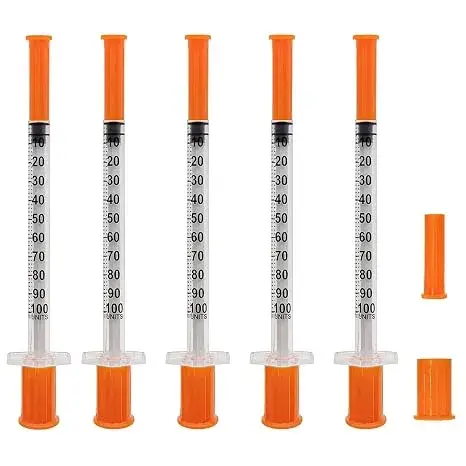
- Insulin Syringes (U-100): 20 Syringes (1 per day)
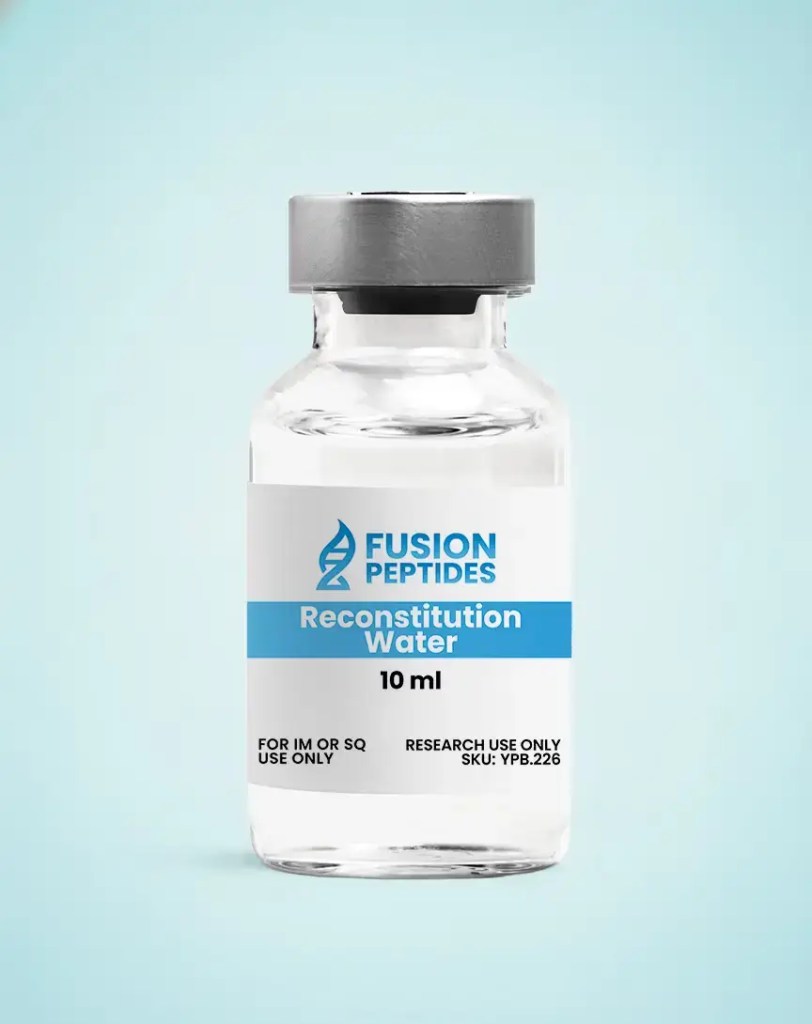
- Bacteriostatic Water: 1 × 10 mL bottle (5.0 mL used per vial = 10.0 mL total)
- Alcohol Swabs: 40 Swabs (2 per day: 1 for vial stopper, 1 for injection site)
Reconstitution Steps
- Prepare and Sanitize
Wipe the rubber stoppers of both the 10 mL bacteriostatic water bottle and the 50 mg Epithalon vial with fresh alcohol swabs. Allow them to air-dry completely. - Draw Diluent
Using a sterile syringe, draw up exactly 5.0 mL of bacteriostatic water. - Add Liquid Slowly
Insert the needle into the 50 mg Epithalon vial at a slight angle. Direct the stream of bacteriostatic water down the inner glass wall of the vial rather than spraying directly onto the lyophilized powder cake to prevent foaming. - Dissolve Content
Gently roll or swirl the vial between your palms until the powder is entirely dissolved and the liquid is completely clear. Do not shake vigorously. - Label and Refrigerate
Label the vial with the preparation date and concentration (10 mg/mL). Refrigerate immediately at 2–8°C (35.6–46.4°F), protected from light exposure.
Storage & Stability
- Lyophilized Powder (Unmixed): Store long-term frozen at −20°C (−4°F) or refrigerated at 2–8°C (35.6–46.4°F) in a dark, dry environment. Allow unmixed vials to reach room temperature prior to reconstitution to minimize condensation.
- Reconstituted Solution (Mixed): Store strictly refrigerated at 2–8°C (35.6–46.4°F). Do not freeze after mixing. Reconstituted with bacteriostatic water, a 50 mg vial remains stable under refrigeration for up to 28 days (comfortably covering the 10-day usage window per vial).
Subcutaneous Injection Technique
- Timing: Inject once daily in the evening or shortly before bedtime to complement the body’s peak nocturnal melatonin production.
- Injection Sites: Select areas with a rich subcutaneous fat layer, such as the periumbilical region of the abdomen (at least 2 inches away from the navel), outer upper thighs, or upper outer arm.
- Site Rotation: Rotate injection sites daily across different quadrants to prevent localized tissue lipohypertrophy or skin sensitivity.
- Administration Method: Pinch a fold of clean skin, insert the U-100 needle at a 45° to 90° angle, and depress the plunger smoothly. Hold for 2 to 3 seconds before withdrawing to prevent backflow.
- Safe Disposal: Discard used single-use syringes immediately into an approved, puncture-proof sharps container.
Technical Notes & Observational Safety
- High Safety Margin: Published preclinical and clinical literature show Epithalon to be exceptionally well-tolerated, with no reports of serious adverse events or toxic accumulation over extended follow-ups.
- Alternative Cycle Protocol: An alternative literature protocol utilizes 10 mg daily for 10 days (yielding the same 100 mg total cumulative dose per cycle). With the 50 mg vial at 10 mg/mL, a 10 mg daily dose equals 100 units (1.00 mL) per injection for 10 consecutive days.
Regulatory Compliance Disclaimer
IMPORTANT NOTICE: This product is engineered and distributed exclusively for in-vitro laboratory testing and scientific research applications. It is strictly NOT a medicine, drug, or dietary supplement and is not intended for human consumption or veterinary use. This compound has not been evaluated or approved by the MHRA, FDA, or EMA. Any use outside of legitimate, controlled laboratory environments is strictly prohibited. The purchaser assumes all liability for the safe handling and legal compliance of this material.
View Supplier

References
- Int J Mol Sci (MDPI)
- PMC/Biogerontology
- Neuroendocrinology Letters (PubMed)
- Bull Exp Biol Med (PubMed)
- Alzheimer’s Drug Discovery Foundation
- CDC