GLP-3 RT 20 mg Dosage Protocol
Table of Contents
What is GLP-3 RT?
GLP-3 RT (commonly referenced in metabolic research as Retatrutide, RT30, or GL-3 RT) is a synthetic unimolecular triple-incretin receptor agonist. It is engineered to engage three major metabolic signaling pathways simultaneously:
- GIP (Glucose-dependent insulinotropic polypeptide) receptor
- GLP-1 (Glucagon-like peptide-1) receptor
- Glucagon (GCGR) receptor
By integrating glucagon receptor agonism alongside traditional incretin pathways (GLP-1 and GIP), GLP-3 RT introduces a thermogenic component that actively drives energy expenditure, white-fat browning, and hepatic lipid reduction. Phase 2 clinical trial data demonstrated up to 24.2% body weight reduction at 48 weeks—the largest weight reduction recorded for any anti-obesity molecule in development. It is studied as an experimental compound for advanced metabolic and obesity research models.
Potential Areas of Research
- Obesity & Weight Management: Profiled for significant appetite suppression via central nervous system (CNS) pathways and accelerated body fat reduction.
- Energy Expenditure & Thermogenesis: Researched for its ability to convert white adipose tissue into brown fat, raising resting basal metabolic rate via glucagon receptor engagement.
- Glycemic Control & Beta-Cell Function: Studied for enhancing insulin sensitivity, improving pancreatic beta-cell function, and reducing HbA1c, fasting glucose, and fasting insulin levels.
- Hepatic Steatosis & NASH: Investigated for rapidly reducing liver fat content, lower intrahepatic triglycerides, and supporting metabolic dysfunction-associated steatohepatitis (NASH/MASH) models.
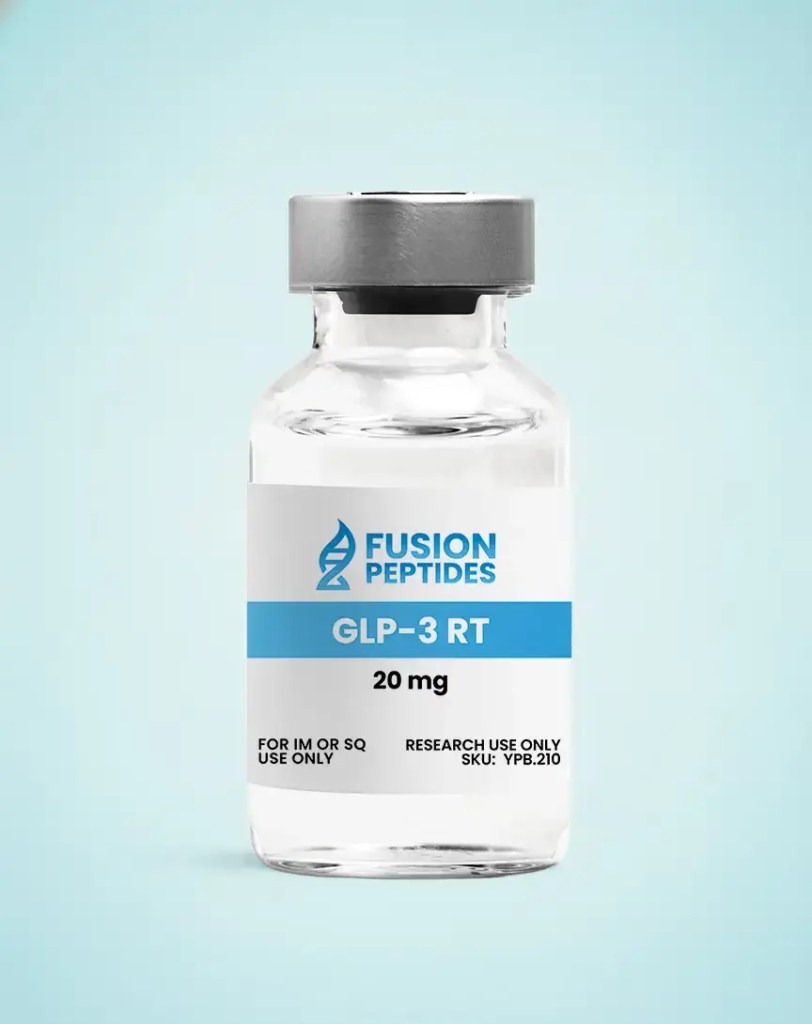
GLP-3 RT 30 mg Dosage Protocol
- Vial Size: 30 mg (30,000 mcg)
- Reconstitution: 3.0 mL Bacteriostatic Water
- Concentration: 10 mg/mL (10,000 mcg/mL or 100 mcg per U-100 Syringe Unit)
- Administration Route: Subcutaneous Injection
- Frequency: Once Weekly
- Protocol Schedule: Step-wise weekly titration schedule over 17+ weeks
Dosing & Reconstitution Chart
Phase
Weekly Dose (mg / mcg)
Syringe Units (U-100 / 1mL Syringe)
Vial Lifespan & Consumption Note:
Reconstituting a 30 mg vial with 3.0 mL yields a concentration of 10 mg/mL. Depending on the titration week, a single 30 mg vial provides:
- Weeks 1–4 (2 mg/week): 15 weekly doses per vial (lasts ~15 weeks at this dose).
- Weeks 5–8 (4 mg/week): 7.5 weekly doses per vial.
- Weeks 17+ (10 mg/week): 3 weekly doses per vial.
Reconstitution Steps
- Equipment Preparation
Allow the unopened lyophilized vial to adjust to room temperature. Thoroughly clean the rubber stopper of both the bacteriostatic water bottle and the GLP-3 RT 30 mg vial with sterile alcohol swabs. Allow to air-dry completely. - Draw Diluent
Using a sterile mixing syringe, draw up exactly 3.0 mL of bacteriostatic water. - Gentle Addition
Insert the needle through the stopper at a slight angle. Slow-drip the water down the inner glass wall of the vial. Do not spray directly onto the lyophilized powder cake to avoid excessive foaming. - Dissolve Solution
Gently swirl or roll the vial between your palms until the powder fully dissolves into a clear, colorless liquid. Do not shake vigorously, as mechanical agitation can shear the delicate peptide structure. - Refrigerate Immediately
Label the vial with the preparation date and concentration (10 mg/mL). Store in the refrigerator immediately.
Storage & Stability
- Lyophilized Powder (Unmixed): Store frozen at −20°C (−4°F) or below for optimal long-term chemical integrity. Protect from direct heat, light, and moisture.
- Reconstituted Solution: Refrigerate at 2–8°C (36–46°F) immediately following mixing.
- Usage Limit: Use reconstituted solution within 7 days post-mixing for maximum chemical consistency and potency in experimental trials.
Subcutaneous Injection Technique
Frequency: Administer subcutaneously once weekly on a consistent day.
Injection Sites: Standard subcutaneous regions with adequate adipose layer:
Abdomen: Periumbilical region (staying at least 2 inches away from the navel).
Thighs: Outer upper thighs.
Upper Arms: Posterior/outer upper arm area.
Site Rotation: Rotate administration locations systematically across test subjects to minimize localized tissue sensitivity or subcutaneous lipodystrophy.
Safe Handling: Depress plunger slowly over 5–10 seconds. Dispose of single-use syringes immediately into a dedicated, puncture-proof sharps container.
Technical Notes & Observational Safety
- Gradual Escalation: Step-wise dose progression every 4 weeks (from 2 mg up to 10 mg weekly) is critical for managing gastrointestinal side effects (e.g., nausea, delayed gastric emptying) common to multi-incretin agonists.
- Triple-Agonist Mechanism: Unlike single-agonist (GLP-1) or dual-agonist (GLP-1/GIP) compounds, the additional glucagon pathway actively elevates basal resting metabolic rate rather than relying solely on reduced caloric intake.
Regulatory Compliance Disclaimer
IMPORTANT NOTICE: This content is prepared strictly for educational and scientific laboratory research purposes. GLP-3 RT (Retatrutide) is an investigational triple-receptor agonist peptide provided solely for laboratory research use (RUO). It is not approved for human or veterinary use, medical diagnosis, treatment, or clinical deployment. Always consult qualified healthcare professionals or laboratory compliance officers regarding research chemical handling.