
NAD+ 1000 mg Dosage Protocol
Table of Contents
What is NAD+?
NAD+ (nicotinamide adenine dinucleotide) is a critical coenzyme found in all living cells, essential for cellular energy metabolism, DNA repair, and mitochondrial bioenergetics. It functions as a primary electron carrier in redox reactions (glycolysis, the TCA cycle, and oxidative phosphorylation) and serves as a substrate for enzymes like sirtuins and PARPs.
Because endogenous NAD+ levels naturally decline with age and metabolic stress, exogenous supplementation aims to restore cellular NAD+ pools. While clinical research historically relied on high-dose intravenous (IV) infusions, subcutaneous administration at lower daily doses has emerged as a practical, well-tolerated approach for ongoing maintenance.
Preclinical and clinical literature highlight NAD+’s capacity to support mitochondrial function, facilitate DNA damage repair, enhance cognitive clarity, and improve systemic metabolic resilience. NAD+ is widely studied as an investigational compound for cellular health and anti-aging research.
Potential Areas of Research
- Cellular Bioenergetics & ATP Production: Studied for its essential role in driving mitochondrial respiration and optimizing metabolic energy output.
- DNA Repair & Sirtuin Activation: Profiled for supporting PARP enzymes and sirtuin pathways involved in genome integrity and cellular longevity.
- Cognitive & Metabolic Support: Examined in clinical case reports and pilot studies for supporting mental clarity, mood stability, and metabolic efficiency.
- Substance Recovery & Craving Reduction: Investigated in higher-dose therapeutic protocols for supporting neuro-chemical balancing and detoxification processes.

NAD+ 1000 mg Dosage Protocol
- Vial Size: 1000 mg (1,000,000 mcg)
- Reconstitution: 3.0 mL Bacteriostatic Water (0.9% Benzyl Alcohol)
- Concentration: 333.3 mg/mL (~3.33 mg per U-100 Syringe Unit)
- Administration: Subcutaneous Injection
- Frequency: Once daily at a consistent time (morning preferred by many)
- Protocol Schedule: 8 to 16 consecutive weeks (Gradual titration starting at 50 mg/day in Week 1, escalating to 75 mg in Week 2, and maintaining at 100 mg/day for Weeks 3–16)
Dosing & Reconstitution Chart
Weeks
Daily Dose
Syringe Units (U-100 / 1mL Syringe)
Vial & Stability Note: Reconstituting a 1000 mg vial with 3.0 mL of bacteriostatic water provides a concentrated ~333.3 mg/mL solution (30 units = 100 mg). At full maintenance dosing (100 mg/day), one 1000 mg vial lasts 10 days. Because reconstituted NAD+ must be used within 14 days, this 10-day consumption cycle ensures maximum potency before degradation occurs.
Protocol Supply Calculations
For an 8 to 16-week daily subcutaneous protocol with gradual titration:
- NAD+ 1000 mg Vials: 6 vials for 8 weeks (5,075 mg needed); 8 vials for 12 weeks (7,875 mg needed); 11 vials for 16 weeks (10,675 mg needed).
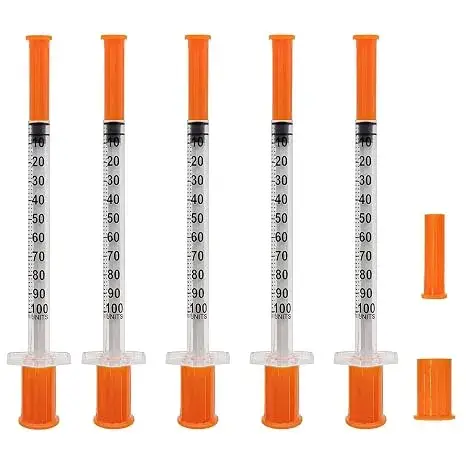
- Insulin Syringes (U-100, 1 mL): 56 syringes for 8 weeks; 84 syringes for 12 weeks; 112 syringes for 16 weeks (1 per day).
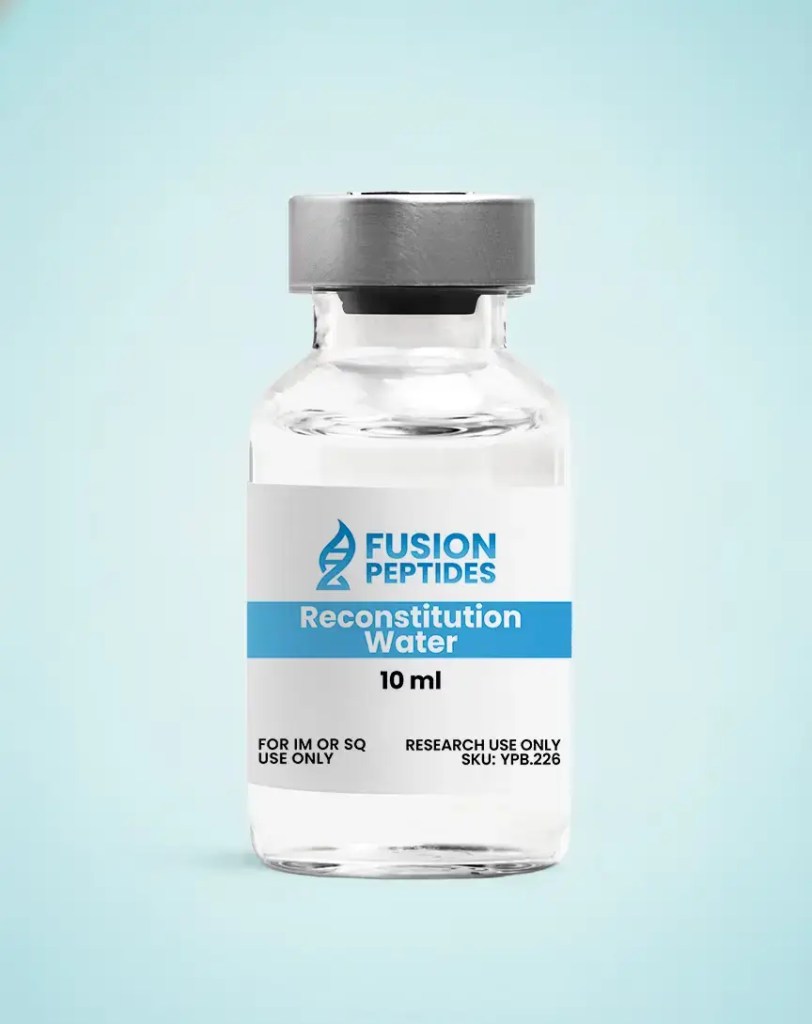
- Bacteriostatic Water: 2 × 10 mL bottles for 8 weeks (18 mL used); 3 × 10 mL bottles for 12 weeks (24 mL used); 4 × 10 mL bottles for 16 weeks (33 mL used).
- Alcohol Swabs: 112 swabs for 8 weeks; 168 swabs for 12 weeks; 224 swabs for 16 weeks (2 per day: 1 for vial stopper, 1 for injection site).
Reconstitution Steps
- Prepare and Sanitize
Allow the unopened lyophilized vial to reach room temperature to minimize condensation. Wipe the rubber stoppers of both the bacteriostatic water bottle and the 1000 mg NAD+ vial with fresh alcohol swabs. Allow to air-dry completely. - Draw Diluent
Using a sterile mixing syringe, draw up exactly 3.0 mL of bacteriostatic water. - Add Liquid Slowly
Insert the needle into the 1000 mg NAD+ vial at a slight angle. Direct the stream down the inner glass wall of the vial rather than spraying directly onto the powder cake to prevent foaming. - Dissolve Content
Gently roll or swirl the vial between your palms until the powder is entirely dissolved and the liquid is completely clear and colorless. Do not shake vigorously. If cloudiness or precipitate appears, discard. - Label and Refrigerate
Label the vial with the preparation date and concentration (333.3 mg/mL). Refrigerate immediately at 2–8°C (35.6–46.4°F), protected from light exposure. Use within 14 days.
Storage & Stability
- Lyophilized Powder (Unmixed): Store long-term frozen at −20°C (−4°F) in a dry, dark environment. NAD+ powder is hygroscopic, so avoid unnecessary moisture exposure.
- Reconstituted Solution (Mixed): Store strictly refrigerated at 2–8°C (35.6–46.4°F) immediately after mixing. Keep protected from UV light. Use within 14 days for optimal stability and potency. Do not refreeze reconstituted liquid.
Subcutaneous Injection Technique
- Timing: Inject once daily at a consistent time each day (morning administration is preferred by many users to avoid sleep disruption).
- Injection Sites: Select areas with adequate subcutaneous fat, such as the periumbilical region of the abdomen (at least 2 inches away from the navel), outer upper thighs, or upper arms.
- Site Rotation: Rotate injection sites systematically across different quadrants to prevent tissue soreness, scar tissue, or lipohypertrophy.
- Administration Method: Pinch a fold of clean skin (1–2 inches), insert the U-100 needle at a 45° angle (or 90° if using shorter needles), and depress the plunger slowly over 5–10 seconds to minimize localized stinging or irritation. Hold for a few seconds before withdrawing.
- Safe Disposal: Discard used single-use syringes immediately into an approved, puncture-proof sharps container. Never recap needles.
Technical Notes & Observational Safety
Titration Necessity: Starting at 50 mg daily and escalating gradually helps mitigate transient side effects such as fatigue, insomnia, anxiety, or mild headache, which can occur if high doses are introduced too quickly.
Localized Reactions: Mild injection-site reactions (redness, itching, temporary soreness) may occur and typically resolve within hours. If mild persistent redness occurs, hydrocortisone cream and strict site rotation are recommended.
Volume Comfort: The administration volume (0.15 mL to 0.30 mL) is well within the standard subcutaneous comfort threshold ($\le1.5\text{ mL}$).
Regulatory Compliance Disclaimer
IMPORTANT NOTICE: This content is intended exclusively for educational and research purposes. NAD+ is provided for research use only and is not approved for human consumption or self-medication. This material does not constitute medical advice, diagnosis, or treatment. Always consult qualified healthcare professionals before beginning any therapeutic or supplementation protocol.
View Supplier

References
- Pharmaceuticals (Basel)
- Current Psychiatry Research and Reviews
- Fagron Academy (US)
- Jinfiniti (NAD+ Dosage Chart)
- Olympia Pharmacy
- Empower Pharmacy
- Fagron Academy (NAD+ Review)
- Jinfiniti (Dosage Chart)
- Fagron Academy
- PMC (Subcutaneous Drug Injection Review)
- CDC Subcutaneous Injection Guide
— Subcutaneous injection technique guide: recommended injection sites, needle angle (45–90°), and aspiration recommendations.
- NCBI Bookshelf